I also happened to have forgotten while writing this post what exactly she said. But I remember the gist of it: homeschooling is dumb and homeschoolers are awkward.
My one friend stiffened and grinned politely.
"You're sitting with two of them," I said to her.
The conversation followed the textbook course of all such conversations. The anti-homeschooling girl, after admitting my friend and I weren't awkward at all and saying we were normal, not homeschooled (whatever that means) asked what the heck we did for a social life.
"I didn't have much of one. But it was my fault. I played video games," my friend said.
"I did. But I also wrote novels," I said.
"Novels?" she said.
"Yeah."
My guyfriends chuckled behind their soda-filled brown plastic cups.
"How did you even have time for that?" she asked.
"I was homeschooled." I admit, a little bit of snark leaked past my braces and lipstick and prepackaged smile. "I didn't have hours of homework."
"That's because all you ever did was homework," said my other guyfriend teasingly.
"Oh stop." I laughed and rolled my eyes. Public schoolers.
"But like, how long have you been doing that?" the girl asked.
I don't like answering this question because the truth always comes out conceited. But I told her.
"I've been writing in chapter form since I was seven or eight."
Which, that shouldn't really be conceited. Lots of kids can play more piano at that age than I can now. But for some reason I always feel like I'm bragging when I say that.
Which, that shouldn't really be conceited. Lots of kids can play more piano at that age than I can now. But for some reason I always feel like I'm bragging when I say that.
So two things came out of this conversation for me. It happened a number of weeks ago but I remembered it today and the two things as well.
1. Homeschooling is awesome because it gives kids more time to pursue their talents and strengths.
2. It'd be fun if I shared some old writing sometime.
So here's some old writing. Snippets from what seems to me forever ago but really wasn't. Merry Christmas.
 |
| Me, 14, homeschooling between writing sessions |
From AXEL AND THE OBELISK ISLANDS, which I wrote in 2011, just after turning 14, for my little brothers. The intention was to give them an adventure novel on their reading level. It broke a lot of rules I didn't know existed at the time, like having an omniscient narrator, using way too many filters and instances of the word "was," but it's still special to me in its Staples plastic binding. I even illustrated it, too.
Nadja stopped her gondola and
looked at the rope on its nose, unsure of what to do. She looked up at the boy.
He was pretending to watch a duck float by in the street, his hands still in
his pockets.
“Signor,”
said Nadja, trying out the funny Pantellerian word for the first time. It meant
sir.
“Signor,”
said Nadja, “Please tie down my gondola.”
The
boy turned his head and stared at her with big blue eyes in a white face. Nadja
was surprised. This boy was not a Pantellerian at all. He looked like he came
from her home, Lopatka.
“Why?”
the boy asked. His voice was high for a boy’s, even for one so small.
“Can
you do it?” asked Nadja doubtfully. Maybe the boy was a visitor, too, and did
not know how to tie down gondolas. But she was wrong.
“Yes,”
said the boy with a nod.
“I
can’t,” said Nadja.
The
boy looked at the small red gondola, then at Nadja, then back at the gondola
again. Then he shrugged, pulled thin hands from his big pockets and quickly
tied the gondola down.
 |
| Venice, inspiration for Axel's setting |
“There,”
he said, fixing his hat and putting his hands back in his pockets. Nadja was so
curious she forgot to say thanks.
She
climbed out onto the dock. She was taller than the boy.
“Are
you from Lopatka?” she asked him.
“I’m
from here,” the boy said, looking down.
“No,
I mean, what is your blood?” Nadja persisted. “What is your ethnicity?”
“I
don’t know what you mean,” the boy said hopelessly, kicking the deck.
“Nadja
Rachsky,” said Nadja, holding her hand out. “I’m eleven.”
The boy looked at her hand as if he did not know what to do with it and dug his own deeper into his big pockets.
The boy looked at her hand as if he did not know what to do with it and dug his own deeper into his big pockets.
“Axel
Verslagg,” he mumbled. “They say I’m nine.”
“Axel
isn’t a Pantellerian name,” Nadja said. “Where are your parents from?”
Axel
bit his lip and stared at her out from under his hat. “I’m from here,” he said
again.
******
 |
| Me, 15, typing out Shards of Tara |
Here's another older excerpt, from when I was 15, out of urban fantasy THE SHARDS OF TARA (which I am currently revising into a very different story).
The truck’s driver, muttering, had
climbed out. Harrison grew a little nervous at the sight of the man’s fine gray
businessman suit. The man crouched on the asphalt for a moment and came back up
with the box in his hand. He turned and pointed a finger at Harrison.
“You,
sir! This yours?” he demanded, extending the box and gesturing at it.
“Yes,
sir,” Harrison managed, trying not to stammer and shoving his hands in his
pockets. “If I broke your, uh, truck…”
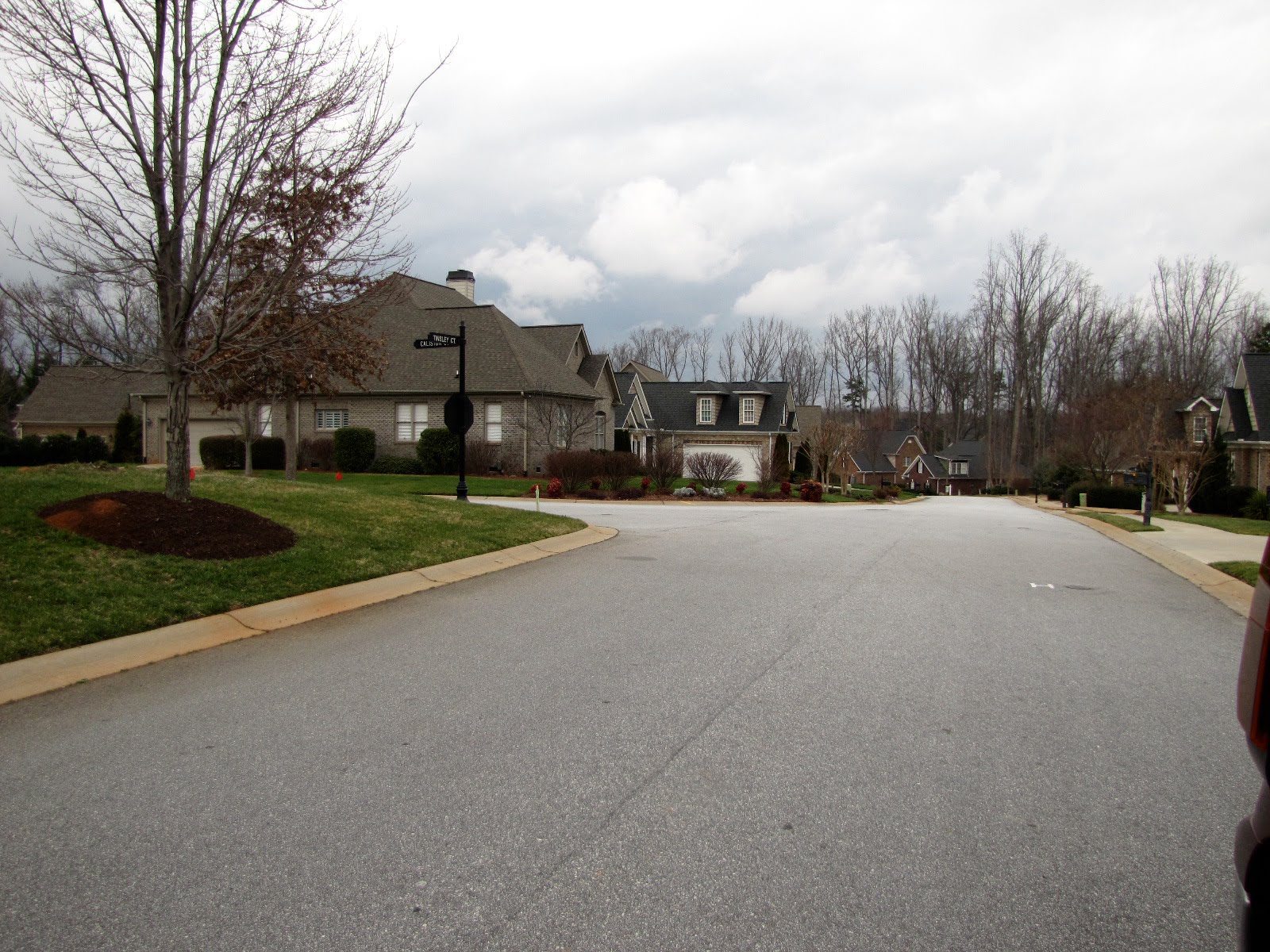 |
| Neighborhood in Greenville, SC, setting of Shards of Tara |
“What
were y’ trying to do, kid?” the man cut in. “Smash it?”
Harrison
nodded and kicked red dirt. “If I broke your truck I’ll pay for it,” he said
over the vehicle’s still-operating engines. Or
try. I’ve only got, like, forty dollars in my lockbox in my sock drawer. If
Mackenzie wasn’t always borrowing my cash…
“Nah,
nah, it’s fine,” the man waved a hand at him. “Geez. A little… I guess this is
a ring box… and it’s intact. You’d think a baby like this,” he jerked a
asphalt-dusted thumb toward his precious truck, “would drive over boulders the
size of Thanksgiving turkeys like in the commercials. Guess I better have my
pressure checked.”
“Yeah,
guess so.” Harrison was trying not to sound sulky. He had never been so
frustrated with an inanimate object in his life. Except for when he had got
stuck in an elevator in a power-outage when he was four. All the same, he was
going to get that box open if it killed him.
The
businessman tossed it to him. “Well, just don’t do it any more. Have you tried
a hammer?”
“Yeah.”
The
man shrugged. “Oh well. See ya, kid.”
He
drove his truck away a little more cautiously. All Harrison could do was stare
at the blasted red box and think about how hungry he was.
Suddenly
the world began to fade. Harrison furrowed his brow, scrubbed his eyes. There
was a cold wind from nowhere that smelled like Christmas trees, and then he was
standing on the edge of a cliff by an angry gray sea.
“Hey!”
he yelled, whirling around and freezing.
There
was a woman’s silhouette standing there, watching him with eyes he could not
see but were probably creepy.
“Hello,
Riordan Rose,” she said, her voice neither male nor female, reaching out a
gestured arm. “This is a sign to you. Keep it. By it the United will know you.”
“What?”
said Harrison, taking a step back.
But
there was nothing there. Harrison screamed as he dropped towards snarling dark
waters. He was falling, the box inches from his fingers. It snapped open,
spitting out something small and bright. He grabbed it.
Instantly
his mind snapped and he was standing in his neighborhood, the open box in one
hand and the small thing in the other.
“You
won’t remember,” the woman’s voice said in his head.
And now, just for kicks, here's some fresh writing from one of my WIPs, The Waterfront Girls.
 |
| Me, now |
“Hi,”
said Guy Allamby Bonnet. He stood over her, his shadow tangling with the pink
house’s, and offered a hand. Probably to help her up. Shalayla shook it. He
pocketed his fingers awkwardly. “Um. Thanks for meeting me.”
“No problem. Don’t know why it
couldn’t be at the candy shop, though.”
“It’d take too long.” Guy Allamby Bonnet
ran a hand over his day’s worth of white man stubble. “Miss…”
“Shalayla, but sure as heck you
don’t call me Shay, Mister Bonnet.”
“Sounds good, if you call me Guy. My
grandpa’s house is not far from here, but I figured the pink house was an easy
meeting place.”
“That’s fine.” Shalayla stood,
slinging her board over her shoulder and ignoring his offered white hand again.
“There’s one thing you gotta know though.”
“I’ll pay you want you want.”
“Not that.” Shalayla flung her
orange-dyed braids behind her. I’ve got friends. Four of them.”
 |
| The pink house on Rainbow Row, Charleston, SC |
“Oh, right. You mentioned Julia.”
“They’re in on this, and they will
be the whole time, or no deal.”
Guy shifted on his leg and sampled
his coffee. “Okay, deal. Now let’s go.”
He gestured for her to go first. Her
skateboard’s silhouette swayed back and forth under her sauntering feet.
Together, they walked in mutual I-just-met you silence under the palmettos, past a
kissing selfie couple, Confederate flags, and praline shops leaking
cinnamon-sugared steam into the street. The Waterfront parted the buildings
framing the streets like a curtain just ahead, but they turned into a gravel
driveway.
Shalayla leaned on her skateboard as Guy
fiddled with the custom iron fence, its bars a-swirl with pineapple patterns.
Above them rose a Greek revivalist mansion, its white pillars and bubbling
porches poised and polished.
“Ah ha.” Guy swung the gate open and let
her in first. Gravel ground under Shalayla’s converses.
“So this is your granddad’s house?”
she asked. The words were half out of her wire-corested mouth when something
fluttered in an upper window. A curtain. A face. Shalayla paused and Guy passed
her and painted rocking chairs to the door.
“Yeah,” he said, scrubbing his feet
on a scuffed Gamecocks welcome mat. The kind one buys at Walmart in the back of
the store, where everything is motor oil reek and bike racks. He dug his
pockets for a key, apparently determined not to put his coffee down. “Oh,
shoot, where did I put those keys? Yeah, it’s been in the family for a while
now.”
Shalayla stayed locked on the
breathing window, but nothing more moved. Around her, gnats and magnolias and
silence congregated along the house’s corners. She finally crossed the
photoshopped lawn to the porch, where she laid her board down as Guy pushed the
door open. Dusty dimness and a hallway greeted them.
Guy closed the door and faced her,
his stance closing off the space around them. “Okay, look, Shalayla. My
grandpa…”
“Is crazy, I figured. I was kind of
surprised you weren’t.”
Guy smiled ruefully. “Most people
probably would think I am.”
He led her through opulent walled
halls shrouded in darkness. Most of the furniture appeared rickety and thin.
“Your grandpa sure doesn’t spend
much in the furnishing department,” Shalayla remarked in a darkness-prompted
undertone as they creaked their way up a staircase.
“Actually, that furniture is all
from before the Revolutionary period.”
Shalayla stared at Guy’s swaying,
jacketed shoulders just in front of her. She slid her nail into a groove in the bannister and let it drag in the wood as she climbed. “How the heck did that happen? How can
you even use it?”
“We don’t.” Guy grimaced as they reached
the second floor, the resulting hall tunneled with bookshelves. “We eat on the
floor.”
The books framing their path asked to have
their time-gnawed spines stroked. Shalayla resisted, but the worn embossed
titles watched her.
The
Death of Edward Teach.
The
Downfall of Black Sam Bellamy.
Stede
Bonnet’s Trial.
Stede Bonnet. Shalayla’s finger strayed
to the bone hanging around her neck by a thread. She turned, but Guy was gone.
“Guy?” she said. Left, right, back,
forth, there was no Guy. Only leering books in pressing shelves. Only dust
lazing midair in the humidity. Its grains swung in and out with her accelerating
breath.
Alone.
In the dark.
Somewhere in the emptiness, out of her sight and perception, there was a
man who disappeared abruptly.
Shalayla took a step toward the exit.
Floorboards popped under her weight as she eased her foot down, muscles rigid,
eyes wide, heart hammering. The hallway yawned.
Stupid. Just run for it.
Someone grabbed her arm from behind.


